A small cavity in a child’s tooth can turn serious quicker than many parents expect. Pain, sensitivity, and trouble eating often follow once decay spreads deeper into the tooth. The reason is simple — baby teeth have thinner enamel, which allows bacteria to travel faster toward the nerve.
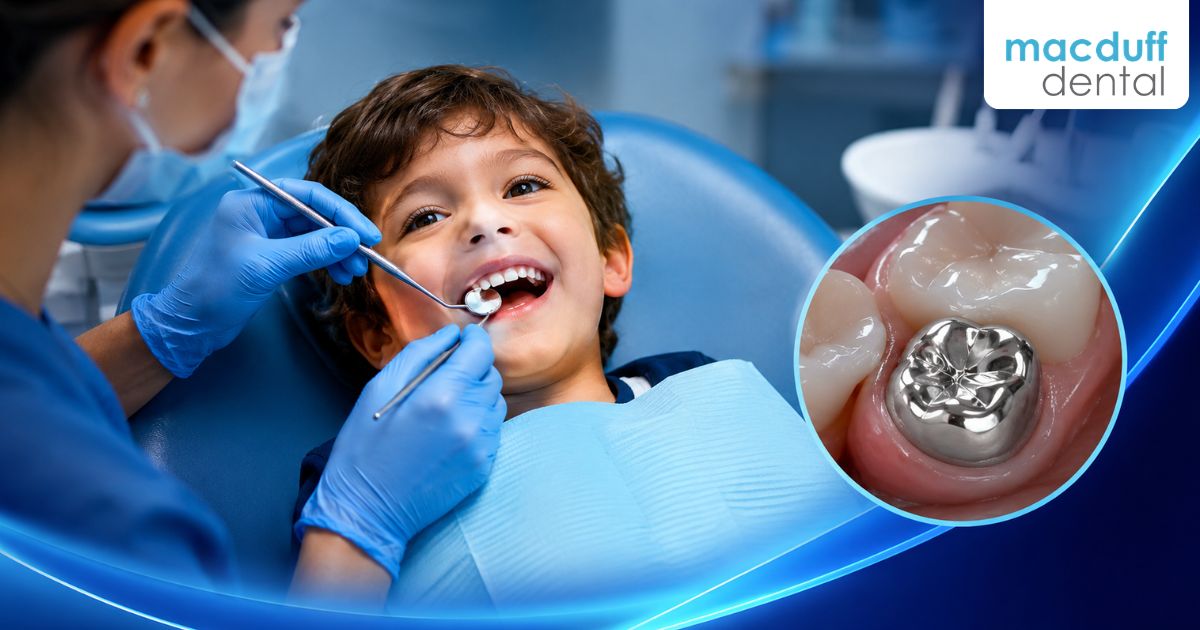
Many parents ask – “Why do dentists recommend a stainless steel crown for a child after severe tooth decay?” The answer lies in strength and protection. A stainless steel crown for child acts like a shield placed over a treated tooth — helping it stay functional and protected until it naturally falls out. In cases of deep decay, it is often the most suitable solution available.
What Is a Stainless Steel Crown for a Child?
A stainless steel crown is a pre-shaped metal cap designed to cover a damaged baby tooth entirely. Unlike a filling, which repairs only a portion, the crown surrounds the whole tooth restoring its shape, strength, and function.
Dentists often rely on this option in paediatric dental care, where the remaining tooth structure is too weak to hold a filling.
Why Stainless Steel Is Preferred for Paediatric Dentistry
Several practical reasons make stainless steel crowns a popular choice:
- Strong and highly durable — ideal for daily chewing
- Long-lasting until the baby tooth naturally sheds
- More affordable than many alternative restorations
- Particularly suitable for molars that handle pressure from eating
In many clinical situations, a stainless steel crown for a child stands out as the most reliable restoration method.
Tooth Infection Treatment in Children – What Parents Should Know
How Tooth Decay Leads to Infection
Decay does not remain limited to the surface for long in children. Bacteria move quickly through the enamel and dentine, eventually reaching the pulp. Pain, swelling, and sensitivity often follow — signs that tooth infection treatment is needed without delay.
Infected Tooth Treatment Options
Dentists focus on removing infection while preserving the tooth wherever possible. Typical steps include:
- Clearing out decayed tissue and bacteria
- Cleaning and disinfecting the inner tooth
- Sealing the space to block further bacterial entry
Prompt infected tooth treatment prevents the issue from spreading to nearby teeth or gums.
Role of Stainless Steel Crown After Infection Treatment
Once the infection has been treated, the tooth is often left fragile and hollow. A crown plays a crucial role at this stage.
- Covers and protects weakened tooth structure
- Blocks bacteria from re-entering the tooth
- Restores chewing ability and comfort
Without that protective layer, the tooth remains vulnerable to further damage.
Advanced Root Canal Treatment for Children Explained
In paediatric dentistry, advanced root canal treatment includes procedures such as:
- Pulpotomy – removal of infected pulp from the crown portion
- Pulpectomy – removal of pulp from both crown and root canals
These treatments stated above aim to save the tooth rather than remove it prematurely.
Why Fillings Are Not Enough After Root Canal
After such procedures, the tooth becomes structurally weak. Fillings often fail in these cases — especially in back teeth that deal with constant chewing pressure.
Why Stainless Steel Crowns Are Essential Post-Treatment
Many parents wonder – “What is the connection between advanced root canal treatment and the need for a stainless steel crown in children?”
The connection is direct and important. A crown acts as the final protective layer — holding the tooth together and sealing it completely.
- Improves long-term success of the treatment
- Prevents fractures in a weakened tooth
- Keeps bacteria out, reducing risk of repeat infection
A stainless steel crown for a child is not just an add-on but a key part of successful treatment.
Treatment Timeline – From Infection to Stainless Steel Crown
Step by Step Process
Understanding the sequence can make the experience less daunting:
- A deep cavity forms over time
- Infection reaches the pulp
- Root canal therapy is performed
- A stainless steel crown is fitted to seal the tooth
Each step builds toward restoring both health and function.
What Parents Can Expect During the Procedure
Most treatments take one or two visits. Dentists use gentle, child-friendly techniques—making the experience manageable even for younger patients. Local anaesthesia keeps the procedure comfortable.
Recovery tends to be quick. Children usually return to normal eating habits within a short time, often with little adjustment needed.
Benefits and Considerations of Stainless Steel Crowns for Children
Stainless steel crowns offer dependable advantages that make them widely recommended:
- Long-lasting protection for treated teeth
- Helps prevent further decay or complications
- Maintains space for proper eruption of permanent teeth
- Reduces the need for repeated dental work
- Performs well under heavy chewing pressure
Common Concerns Parents Have
Questions are natural before any dental procedure:
- Appearance of the metal crown in the mouth
- Safety and suitability of materials used
- Comfort during daily use
- Rare chances of sensitivity or reaction
- Possibility of loosening over time
What to Do After Your Appointment
Simple care habits can help the crown last as intended:
- Encourage brushing twice daily using fluoride toothpaste
- Limit sticky or very hard foods in the early days
- Keep up with regular dental visits
- Guide your child to chew carefully at first
- Watch for any unusual movement or discomfort
Consistent care supports overall oral health and keeps the restoration stable.
The Wrap – Choosing the Right Care for Your Child’s Dental Health
Timely attention to dental issues can make a significant difference in a child’s comfort and development. Proper tooth infection treatment followed by the right restoration helps maintain function and prevents future complications.
A stainless steel crown for child offers a durable and practical way to protect treated teeth — allowing them to last until they naturally fall out. Parents looking for trusted, gentle and expert-led care can turn to Macduff Dental Clinic.
Book a consultation today and give your child strong, lasting protection for their smile.
FAQs About Stainless Steel Crown for Child
1) Is a stainless steel crown safe for children, and are there any risks?
Stainless steel crowns are safe and widely used in paediatric dentistry. Risks are minimal, and complications are uncommon when placed correctly.
2) How long do stainless steel crowns last in children before falling out naturally?
They usually last until the baby tooth comes out on its own, which may take several years depending on age and tooth position.
3) Why is a crown necessary after infected tooth treatment in children?
After infected tooth treatment, the tooth becomes weak. A crown protects it from breaking and helps keep bacteria out.
4) Is advanced root canal treatment painful for kids?
The procedure is carried out under anaesthesia, which keeps children comfortable. Mild soreness may occur afterwards but settles quickly.
5) What happens if a stainless steel crown comes loose or falls off in a child?
A dentist should be contacted promptly. In most cases, the crown can be reattached or replaced to restore protection.