A single missing tooth can slip under the radar at first — but its impact rarely stays small. Eating might start to feel uneven, certain sounds may come out differently, and confidence can take a subtle knock. Over time, the gap does more than sit quietly — it begins to influence the health and position of surrounding teeth.
A common question patients raise is – “how dental implants serve as a long-term tooth replacement solution?” The answer lies in the way they restore strength, stability, and appearance in one approach. The sections ahead break down dental implant treatment in a clear, practical way — helping you understand why it is often chosen as the go-to long-term solution for missing teeth.
Acting Early Makes a Real Difference
A missing tooth sets off gradual changes. Teeth on either side begin to tilt or drift into the empty space — this alters the bite and can place uneven pressure during chewing. Meanwhile, the jawbone beneath the gap no longer receives regular stimulation, which may lead to bone shrinkage.
Changes in bone structure can even affect facial appearance over time — subtle at first, then more noticeable.
The Emotional and Practical Effects of Tooth Loss
Daily habits often shift. Smiling in social settings may feel less natural, and certain foods become harder to enjoy. These small adjustments build up — affecting both comfort and self-assurance.
Early Tooth Replacement Supports Long-Term Oral Health
Timely treatment supports:
- Proper alignment of surrounding teeth
- Maintenance of jawbone density
- Balanced bite and chewing function
Taking action early often leads to a more stable and lasting outcome — a genuine long-term solution for missing teeth rather than repeated short-term fixes.
Understanding Dental Implant Treatment
Dental implant treatment replaces a missing tooth from the root upward. A titanium post is placed into the jawbone, where it gradually bonds with the surrounding bone — creating a secure foundation for a new tooth.
The Three Essential Parts of a Dental Implant
Each implant consists of three key elements:
- Implant post – sits within the jawbone
- Abutment – connects the post to the crown
- Crown – the visible tooth, shaped to match natural teeth
How Implants Compare with Bridges and Dentures
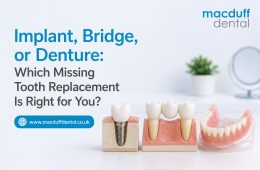
Dentures rest on the gums and may shift slightly during use. Bridges rely on adjacent teeth, often requiring those teeth to be reshaped. Implants function independently — support comes directly from the jawbone, leaving neighbouring teeth untouched.
Natural Teeth Function and Everyday Confidence
Integration with bone gives implants their strength. Chewing feels stable, speech remains clear, and appearance blends naturally — many patients find it difficult to tell the difference between an implant and a natural tooth.
The Long-Term Benefits of Dental Implants
Dental implants are known for their reliability. Once healed, they remain firmly in place — no slipping or movement during meals. Comfort becomes part of everyday life rather than something to think about.
Preserving Jawbone and Facial Structure
Jawbone health is closely linked to tooth roots. Implants replicate that role — stimulating the bone and helping maintain its shape. Over time, this support contributes to a more natural facial appearance.
The Lasting Value of Implant Treatment
Upfront costs can appear higher, although the long-term picture often looks different. Fewer replacements and reduced maintenance needs make dental implant treatment a practical option over time. Conversations around dental implant cost Scotland often highlight this balance — initial investment versus lasting value.
Ideal Situations for Single-Tooth Implants
Implants are often well-suited where:
- A single tooth is missing
- Surrounding teeth remain healthy
- A fixed and natural-looking solution is preferred
A Proven Long-Term Solution for Missing Teeth
Their strength comes from integration with bone — combined with durability and structural support, implants provide a solution that stands the test of time.
Suitability, Planning and Treatment Journey
Many adults are suitable candidates. Good oral hygiene and overall health are important factors. A professional assessment provides a clearer picture based on individual needs.
Key Factors That Influence Eligibility
Several aspects influence suitability:
- Healthy gums free from active disease
- Sufficient bone to support the implant
- Smoking habits, which may slow healing
Preparatory treatments can often address underlying concerns, opening the door to implant treatment.
From Consultation to Final Crown
The process usually follows a structured path:
- Consultation and detailed scans
- Placement of the implant post
- Healing phase for bone integration
- Fitting of the final crown
Each stage builds towards a stable, natural result.
Recovery and Long-Term Implant Care
Recovery tends to be manageable. Long-term success depends on:
- Consistent brushing and flossing
- Regular dental check-ups
- Avoiding excessive pressure on the implant
Simple habits play a key role in maintaining results.
Conclusion
A missing tooth is not only about appearance — it affects how your mouth functions and feels over time. Gaps that are left untreated can lead to changes that become harder to correct later. Dental implant treatment offers a stable and natural-feeling approach — supporting both function and appearance while acting as a long-term solution for missing teeth.
At Macduff Dental Clinic, experienced professionals provide tailored guidance to help you move forward with confidence. Ready to take the next step? Book your consultation today and rediscover comfort, stability, and a smile that feels like your own.
FAQs About Dental Implant Treatment
1) Is dental implant treatment the best option for replacing one missing tooth?
In many cases, it is. Implants offer a stable and natural-looking result without affecting nearby teeth.
2) How long does a dental implant last compared with a bridge or denture?
Implants can last for decades with proper care, while bridges and dentures often need replacement after several years.
3) Is dental implant treatment painful?
Most patients experience only mild discomfort. Modern techniques and anaesthesia help keep the procedure manageable.
4) How long does the full missing tooth replacement process take?
Treatment usually spans a few months, depending on healing time and individual circumstances.
5) Can I still have dental implant treatment if I have bone loss or gum problems?
Yes, many patients can. Additional treatments such as bone grafting may be recommended beforehand.
6) How is the dental implant cost Scotland calculated?
Costs vary based on complexity, number of implants, and any preparatory procedures. Consultations provide a clear and accurate estimate.