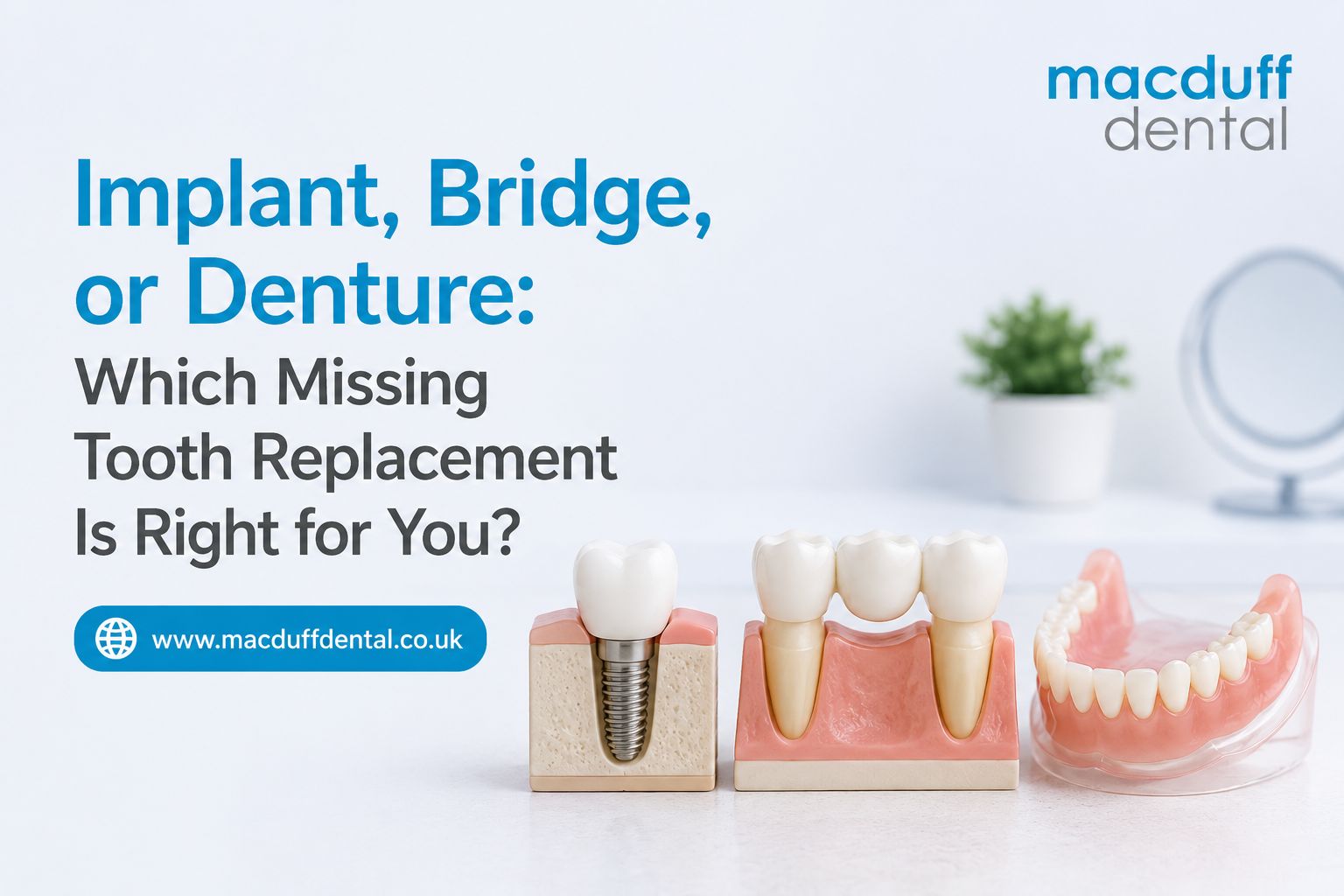
Losing a tooth is more common than most people expect- and far more disruptive. Whether it’s the result of decay, trauma, or a long-overdue extraction, the gap it leaves behind isn’t just cosmetic. It affects how you chew, how you speak, and, honestly, how you feel about your smile. Choosing the right missing tooth replacement matters more than most patients initially realise, and Macduff Dental is here to make that decision significantly clearer.
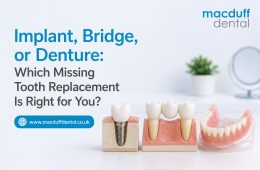
There are three basic options to go for: implants, bridges and dentures. These all come with varying clinical profiles, cost levels and effects on the way your life goes. This blog explores each of these options in a candid way, addresses the actual differences between the two, provides a checklist to help you make the decision and explains when to make that appointment.
What Options are Available for Your Missing Tooth Replacement?
No two patients are in the same clinical situation. What works well for one person may simply not be appropriate for another- and that’s not a bad thing. It just means the starting point is always a proper assessment, not a guess.
Dental Implants
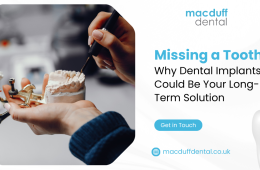
An implant is a titanium post placed into the jawbone, with a custom crown fitted on top. Of all the available options, it comes closest to replicating a natural tooth.
- Looks and functions like a real tooth
- Preserves the jawbone and prevents the facial structure from changing
- Built to last decades with consistent care
- Involves a minor surgical procedure and a healing window of a few months
- Requires adequate bone density- grafting may be needed if significant loss has already occurred
Dental Bridges
A bridge fills the gap by anchoring to the teeth on either side of the space, known as abutment teeth.
- No surgery involved
- Treatment is completed relatively quickly
- Restores both function and appearance effectively
- The neighbouring teeth need to be reduced in size to anchor the bridge
- Lifespan of roughly 10 to 15 years with good maintenance
Dentures
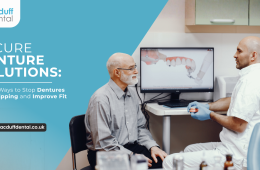
Dentures have come a long way. Modern partial or full dentures are more refined, more comfortable, and considerably more discreet than older versions.
- The most affordable missing tooth replacement option upfront
- Well-suited to patients missing several or all of their teeth
- Easy to clean because they’re removable
- Can feel less stable than fixed restorations, particularly over time
- May need periodic relining as the jawbone gradually changes shape
Did You Know? Around 74% of UK adults have had at least one tooth extracted. Acting early on tooth loss prevents bone deterioration and stops neighbouring teeth from drifting into the gap- both problems that complicate treatment down the line.
What Makes Dental Implants a Long-Term Solution for Missing Teeth?
When durability is the primary concern, implants are consistently the strongest clinical answer. As a permanent tooth replacement solution, an implant fuses with the jawbone through a process called osseointegration- it essentially becomes part of the jaw.
A genuine long-term solution for missing teeth can’t just look good. It needs to protect what’s underneath. Implants stimulate the jawbone the same way natural roots do, which means bone resorption- that gradual shrinking that follows tooth loss- is effectively halted.
- No reliance on neighbouring teeth for support
- Facial contour is maintained over decades, not just years
- Nothing to remove, no adhesives required
- Clinical success rates of over 95% at the 10-year mark
But implants aren’t instant. They involve a healing period, require sufficient bone volume, and come at a higher upfront cost. That said, for many patients, they prove far more economical across a lifetime than options that need replacing every decade or so.
Dental Implant Cost in Scotland: What to Expect?
Cost is often what patients want to understand first- and it’s a completely fair question. Dental implant cost in Scotland depends on how many implants are needed, the condition of the jawbone, and whether any preparatory work like extractions or grafting is required first.
Rough figures to work with-
- A single implant including the crown: typically £1,500 to £2,500 or above
- Multiple implants or implant-supported dentures sit at a higher overall cost
- Payment plans are available at many practices, making treatment more accessible
The thing is, bridges and dentures may need relining or replacing every 10 to 15 years. That’s a recurring cost that, over time, can actually exceed the upfront price of an implant. It’s worth factoring that in before making a purely budget-led decision.
How to Choose the Right Missing Tooth Replacement Option?
Dental implants vs bridges vs dentures- the right answer comes down to several factors that are specific to each patient. Here’s a practical checklist for working through them-
Checklist: Key Factors Before Choosing a Tooth Replacement
- Number of missing teeth- Implants or bridges suit one or a few; dentures are better suited to multiple losses.
- Jawbone health- Implants need adequate density; bridges and dentures do not.
- Budget- Dentures cost less upfront; implants deliver stronger long-term value.
- Treatment timeline- Bridges can be fitted within weeks; implants take several months end-to-end.
- Fixed vs removable preference- A personal factor, but one that significantly affects daily experience.
- Overall health- Certain medical conditions may affect suitability for surgical procedures.
The best missing tooth replacement options are never universal. That’s why the checklist is a starting point, not a final answer- a qualified clinician still needs to assess everything in context.
What is the Role of Aesthetics in Tooth Replacement?
Tooth loss affects more than oral function. It changes how people speak, how they feel in conversation, and how confident they are in social settings. And that’s why many patients exploring tooth replacement for adults also ask about professional teeth whitening– to make sure existing teeth and new restorations create a result that looks cohesive and natural.
The full picture matters. A good dental provider won’t just focus on the gap.
When Should You Seek Professional Advice?
Leaving a missing tooth replacement too long creates complications- neighbouring teeth drift, the jawbone starts to shrink, and the bite changes. The sooner a gap is addressed, the more treatment options remain available.
Signs it’s time to book in-
- A tooth has recently been extracted or knocked out
- Adjacent teeth feel looser or look like they’re shifting
- Chewing is uneven or uncomfortable on one side
- Confidence while speaking or smiling has noticeably dropped
Macduff Dental provides honest, thorough assessments and affordable dental restoration options tailored to each individual- not generic treatment plans built for average patients.
Key Takeaways
- Dental implants are the most durable and natural-functioning missing tooth replacement currently available.
- Bridges are a well-established, surgery-free option for replacing one or a small number of teeth.
- Dentures remain the most accessible solution, particularly for patients with widespread tooth loss.
- Dental implant cost in Scotland varies by case but frequently represents the strongest investment over time.
- A professional consultation is the only reliable way to determine which option is genuinely right for you.
Final Words
A right missing tooth replacement is more than just a gap – it’s a safeguard for the jaw, a functional solution, and a confidence-booster for patients. Each person needs to decide on an implant, a bridge or a denture – and the longer the decision is postponed, the more limited the choices are.
Book a consultation with Macduff Dental and get a clear, personalised treatment plan built around your specific needs. A complete, healthy smile is closer than it might feel right now.
Frequently Asked Questions
1. How long do dental implants last?
With proper care and maintenance, implants can last a lifetime- making them the most durable missing tooth replacement available.
2. Are dentures still worth considering?
For patients with multiple missing teeth, modern dentures are a practical and significantly improved option compared to older versions.
3. Does a dental bridge damage surrounding teeth?
The abutment teeth need to be reduced in size, which is worth discussing with your dentist, though the procedure is clinically established and widely used.
4. What affects the dental implant cost in Scotland?
The number of implants, jawbone condition, and any preparatory treatments all influence the final cost.
5. Can professional teeth whitening be done alongside tooth replacement treatment?
Yes- whitening can be timed alongside replacement treatment to ensure existing and new teeth match seamlessly.